Une analyse précise des mycotoxines peut partir d’un mauvais échantillon
Une seule prise pratique peut rater un foyer contaminé ou faire croire que toute la cargaison l’est.
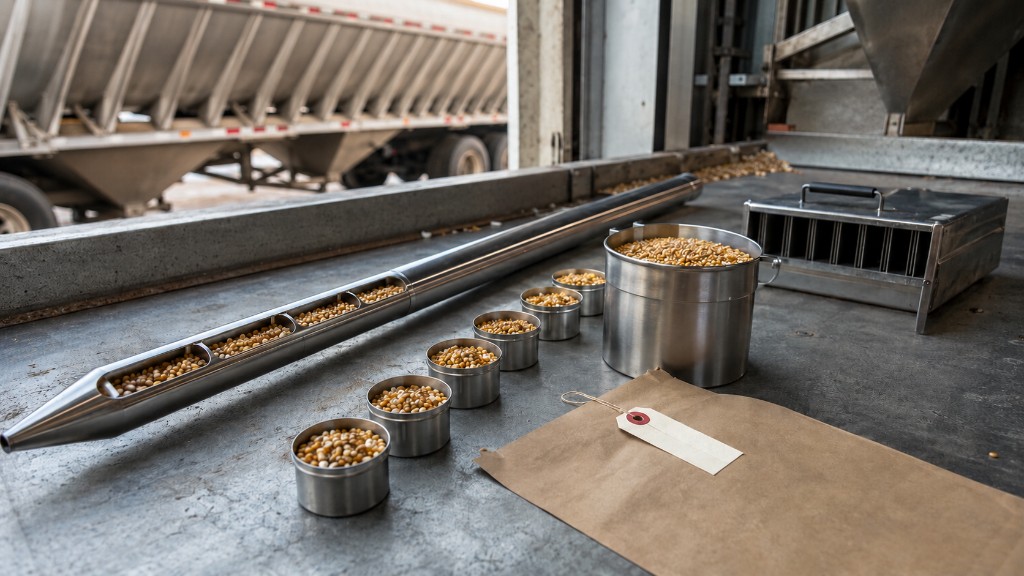

Courtoisie de BarnX
Une meunerie peut utiliser une trousse rapide validée ou un laboratoire accrédité et tout de même prendre la mauvaise décision à la réception avant même le début de l’analyse. Le maillon faible peut être l’échantillon.
Les mycotoxines ne sont pas nécessairement réparties uniformément dans les grains ou les aliments. Elles peuvent former des foyers localisés. Une prise effectuée à un endroit pratique en surface peut rater ces foyers et donner une fausse impression de sécurité. Une prise faite directement dans un foyer peut produire l’erreur inverse et laisser croire que tout le lot contient la concentration mesurée à cet endroit. La moisissure visible n’est pas non plus un raccourci fiable. Nebraska Extension précise qu’une zone visiblement moisie peut ne contenir aucune mycotoxine détectable, tandis qu’une matière sans moisissure visible peut en contenir une forte concentration.
Voilà pourquoi « envoyer un échantillon au laboratoire » ne décrit pas suffisamment le travail. Il faut plutôt concevoir une chaîne de réduction qui conserve la variabilité du lot.
La chaîne de réduction
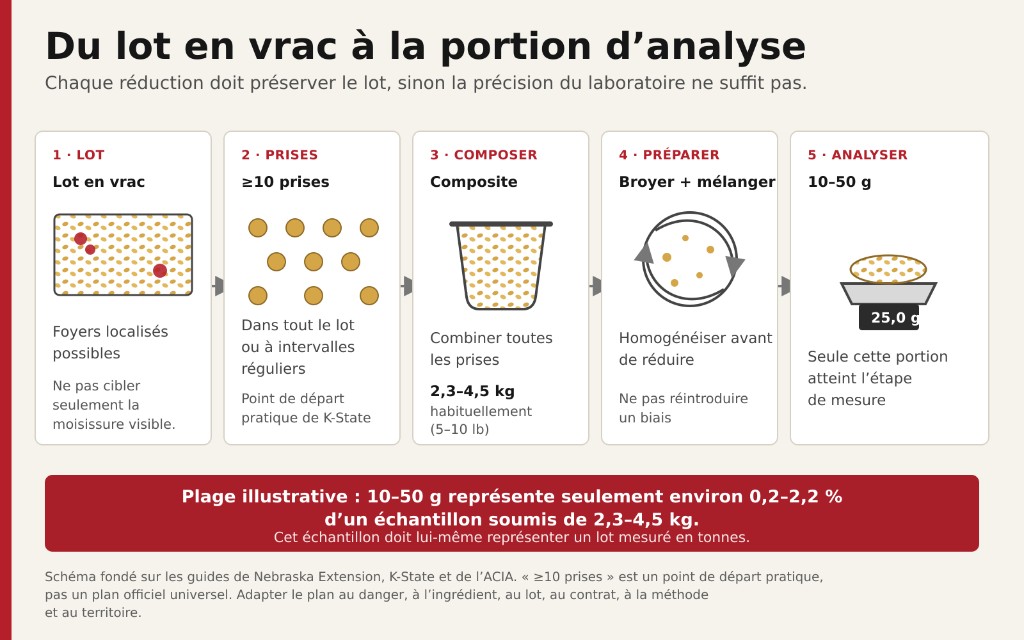
Nebraska Extension décrit un échantillon soumis typique de 5 à 10 lb, soit environ 2,3 à 4,5 kg. Pourtant, seulement 10 à 50 g de cette matière peuvent devenir la portion réellement analysée. Avant de prélever cette petite portion, le laboratoire broie et homogénéise soigneusement l’échantillon soumis. L’Agence canadienne d’inspection des aliments décrit également le broyage, le mélange et, pour les gros échantillons, une réduction représentative au moyen d’un diviseur à riffles avant l’analyse.

Courtoisie de BarnX
Le rapport de grandeur est facile à sous-estimer. Aux extrêmes de ces plages publiées, 10 à 50 g représente seulement environ 0,2 à 2,2 % d’un échantillon soumis de 2,3 à 4,5 kg. Cet échantillon peut lui-même représenter une cargaison mesurée en tonnes. L’instrument du laboratoire peut mesurer sa portion avec précision, mais la précision ne garantit pas la représentativité.
La couverture du lot compte plus qu’une grosse prise pratique
Kansas State University recommande de prélever à au moins 10 endroits espacés uniformément dans un véhicule de transport en vrac, ou au moins 10 fois à intervalles réguliers pendant le chargement ou le déchargement. Pour un produit ensaché, l’université recommande de choisir au hasard au moins 10 sacs. Ces nombres constituent des points de départ pratiques, et non un plan officiel universel convenant à chaque matière première, danger, contrat ou territoire.
Le principe importe davantage que le nombre : répartir les prises élémentaires dans l’espace ou dans le temps, puis les réunir en un échantillon composé représentant le lot défini. Un prélèvement effectué à intervalles réguliers dans un flux en mouvement offre souvent une meilleure couverture qu’une sonde atteignant uniquement la surface accessible d’une cargaison immobile. La sonde ou l’échantillonneur automatique doit convenir à la matière et être utilisé de façon sécuritaire.
Le broyage et l’homogénéisation ne sont pas de simples formalités. Si les grains ou particules contaminés sont rares et irrégulièrement répartis, diviser un composite non broyé peut simplement transférer le biais initial dans un contenant plus petit. Une réduction granulométrique, une homogénéisation et une division représentative donnent à chaque partie du composite une meilleure chance d’atteindre la portion analysée. Les travaux sur la normalisation de l’échantillonnage des mycotoxines indiquent que le prélèvement constitue habituellement la plus grande source d’erreur de l’ensemble de la procédure.
Un contrôle de réception que la meunerie peut auditer
Pour chaque ingrédient ou situation à risque élevé, le plan écrit de la meunerie devrait répondre à six questions :
- Qu’est-ce qui définit le lot : un camion, un wagon, un lot du fournisseur ou une période de réception?
- Où ou quand les prises seront-elles effectuées?
- Combien de prises et quelle masse totale du composite sont requises?
- Comment le composite sera-t-il broyé, homogénéisé et réduit sans contamination ni biais?
- Comment documentera-t-on l’identité, la date, le fournisseur, le lot et les points de prélèvement?
- Que fera-t-on si un résultat approche une limite de décision ou contredit un autre résultat?
Un résultat surprenant devrait entraîner l’examen du dossier d’échantillonnage avant de remettre en cause la trousse ou le laboratoire. Réanalyser la même matière mal prélevée peut simplement reproduire la même erreur avec davantage de précision.
D’autres briefs dans Sécurité et réglementation
D’autres textes dans cette rubrique — chacun se suffit à lui-même.
Sur le bureau
D’autres briefs, dans d’autres rubriques, à lire pendant que vous y êtes.
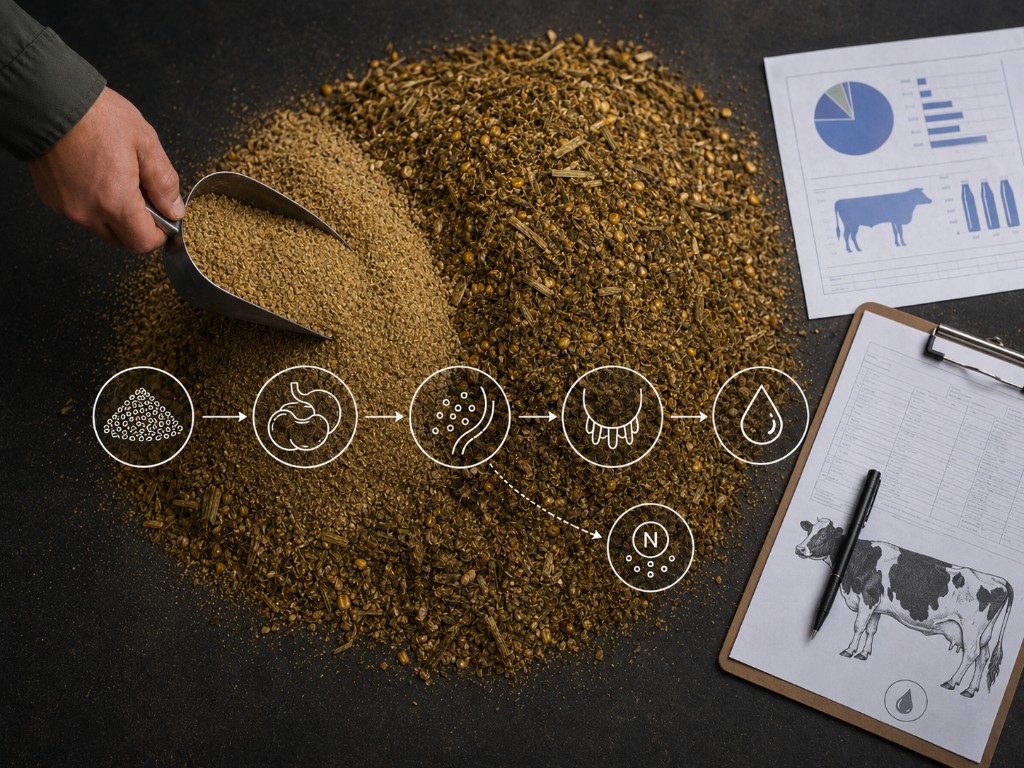 Alimentation et élevagePlus de protéine brute ne signifie pas plus de protéines du laitLa protéine brute indique la quantité d’azote dans la ration, mais non la quantité d’acides aminés digestibles et équilibrés qui atteint la glande mammaire. Avant d’augmenter le tourteau de soya, le tourteau de canola ou une autre source protéique, il faut déterminer si la limite réelle vient de l’ingestion, des protéines microbiennes, des protéines métabolisables, des acides aminés ou de l’énergie.
 Alimentation et élevageLe coût calorique caché des fines de granulésLes fines sont souvent traitées comme un problème de manutention. Les travaux sur la Valeur Calorique Effective montrent qu’elles peuvent aussi retirer jusqu’à 187 kcal/kg d’énergie métabolisable apparente par l’effort physique de manger, modifiant l’indice de consommation même lorsque la formule semble solide sur papier.
 Logistique et livraisonLes granules brisées ont presque triplé. Le test de durabilité a à peine bougé.L’indice de durabilité des granules peut demeurer élevé pendant que la proportion de granules brisées augmente fortement dans la charge. Pour savoir ce qui atteint la mangeoire, il faut suivre à la fois le PDI à l’usine et les fines ou brisures en aval.