The Mill Is Automated. The Workflow May Not Be.
The next operational gain may sit between farm demand, the customer order, the production plan, dispatch and confirmed delivery.

Courtesy of BarnX
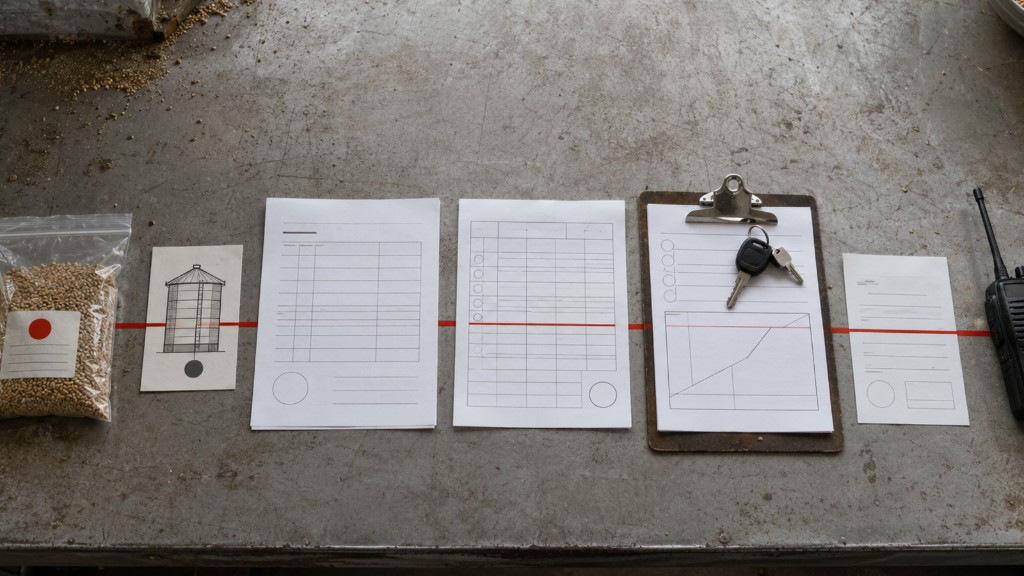
A feed mill can have automatic scales, batching controls and a computerized loadout system while the order itself still travels by phone call, handwritten note, spreadsheet, whiteboard, text message and driver memory.
Each tool may work. The weakness appears between them.
A customer-service representative records the product and quantity. A planner enters it again to build the production schedule. Dispatch copies the load onto another board. A driver receives a screenshot or paper ticket. After delivery, someone calls to ask whether the correct feed reached the correct bin.
The line may be automated, but the workflow around it is not.
The next automation opportunity is often not another machine. It is a reliable way for one operational record to survive every handoff.
Automation often stops at the control room
Manufacturing has long recognized the gap between business planning and plant control. A NIST review of smart-manufacturing standards identifies ISA-95 as a commonly used reference model for developing automated interfaces between enterprise and control systems.
In plain language, the production system needs to know what the business promised, and the business needs to know what production actually completed.
Feed mills add another layer because the workflow begins and ends outside the plant. Demand develops on a farm. The order reaches customer service. Production must fit formula, sequence, capacity and timing constraints. Dispatch must match the load to a truck and route. The driver must confirm the destination and bin. That completed delivery then affects the next replenishment decision.
If each stage creates a new version of the order, the mill does not have one workflow. It has several records that must be kept synchronized by people.
The saving is in fewer touches, not faster typing
Repeated entry consumes time, but typing speed is not the main risk. Every re-entry creates another opportunity to use an old quantity, choose the wrong site, miss a late change or leave another team working from a stale schedule.
A 2019 NIST study examined maintenance work orders, not feed orders, so its results should not be treated as a feed-mill error rate. Its human-factors lesson is still relevant: structured data entry can remain error-prone when the database categories do not fit the language and decisions people actually need to record.
Good workflow automation therefore does more than replace paper with a form. It captures information once, validates critical fields, gives each team the same current record and preserves the history of who changed what.

Courtesy of BarnX
One order should become a controlled record
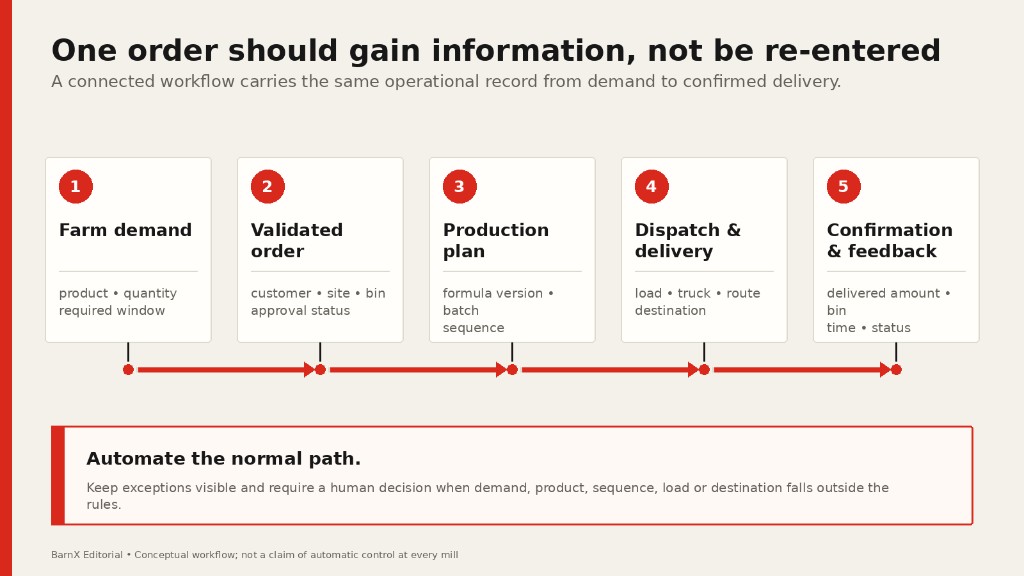
A connected order can gain verified information as it moves:
- Farm demand: product, expected use, quantity and required delivery window. Demand may come from a customer order, a bin reading or a forecast based on deliveries and a feeding program.
- Validated order: customer, farm, site, bin, product eligibility, quantity and approval status.
- Production plan: formula version, batch quantity, production sequence, line and expected completion.
- Dispatch and delivery: load, compartment, truck, driver, route, destination and delivery instructions.
- Confirmation and feedback: delivered quantity, time, product, destination bin, proof of delivery and any exception that should change the next plan.
The record should not move automatically simply because all required boxes contain data. A sudden consumption change, uncertain bin reading, unusual order quantity, restricted production transition, truck-capacity conflict or destination mismatch should stop the normal flow and request a named human decision.
That is the useful division of work: software carries routine information and checks defined rules; people handle uncertainty, authority and exceptions.
Connected records strengthen traceability, but do not create compliance
Under Canada’s Feeds Regulations, 2024, mixed-feed manufacturers must keep manufacturing and traceability records, including mix sheets and formulas, applicable written customer orders, incoming ingredient information and records of who received the feed. During a risk event, requested traceability documents generally must be provided within 24 hours unless more time is granted.
A connected workflow can make those records easier to retrieve because the customer order, manufactured batch, load and destination are linked. It does not make the records accurate by itself.
The system still depends on correct master data, disciplined lot identification, validated procedures, operator confirmation and secure record retention. If the wrong bin is selected at the beginning and nobody verifies it, automation can carry the wrong answer faster.
Three controls separate useful automation from fragile automation
1. One source of operational truth
The ERP, plant-control system and workflow platform do not need to become one application. They do need clear ownership of each field and controlled interfaces between them. Product and customer identifiers should not change meaning as the order moves.
2. Visible exceptions
A system that hides uncertainty behind a green status is dangerous. Low-confidence forecasts, late changes, rule conflicts and incomplete delivery confirmation should be obvious, assigned and time-stamped.
3. A safe recovery path
Operators need defined authority, manual override rules, outage procedures and an audit trail. NIST warns that computing and communication technology can harm safety, performance, quality and cost when the unique needs of manufacturing are ignored. Automation should make the operating procedure clearer, not make the team helpless when the network or data is wrong.
Measure the handoffs before buying the software
Do not justify a technology project with a generic percentage-saving claim. Establish the mill’s own baseline:
- How many times is a typical order manually entered, copied or reformatted?
- How long does an order change take to become visible to production, dispatch and the driver?
- How many orders are changed after they have been released to production?
- How many schedule, dispatch or delivery corrections occur per 100 loads?
- What percentage of deliveries receive same-shift product, quantity and bin confirmation?
- How long does a trace exercise take from customer order to batch, ingredient lot, load and destination?
Start with one product family, customer group or delivery route. Compare the same measures before and after the workflow changes. The defensible business case is the reduction actually observed at that mill, not a number borrowed from a software brochure.
Continue on the desk
Briefs from other lanes worth a read while you are here.
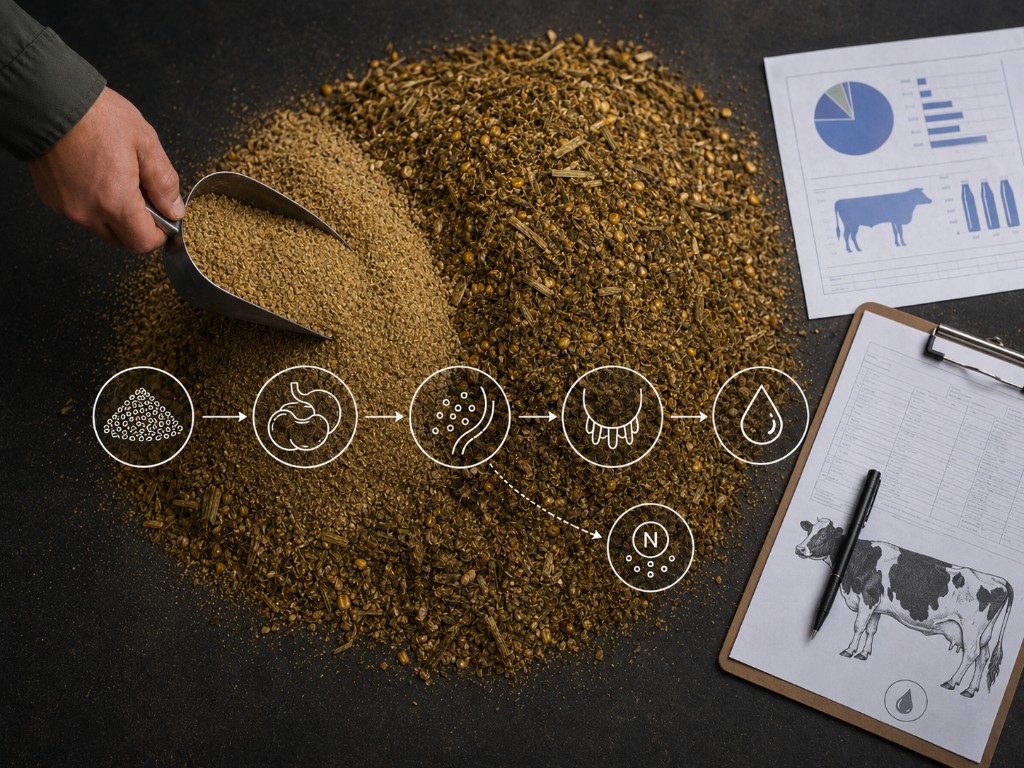 Feed & LivestockMore Crude Protein Is Not the Same as More Milk ProteinCrude protein describes how much nitrogen is in a ration, not how much balanced, digestible amino-acid supply reaches the mammary gland. Before increasing soybean meal, canola meal or another protein source, identify whether the real limitation is intake, rumen microbial protein, metabolizable protein, amino acids or energy.
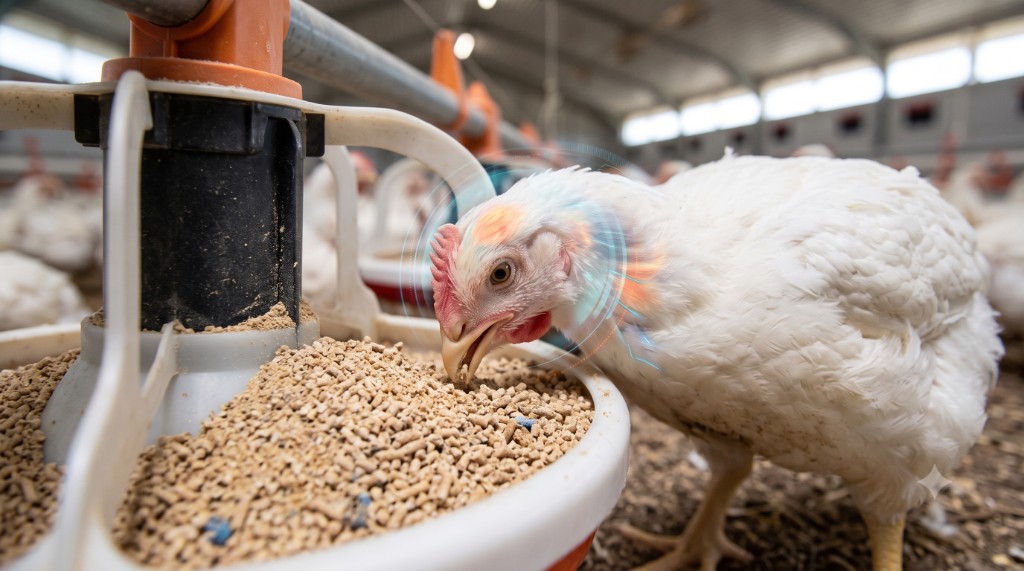 Feed & LivestockThe Hidden Caloric Cost of Pellet FinesFines are often treated as a handling nuisance. Effective Caloric Value research shows they can also drain up to 187 kcal/kg of apparent metabolizable energy through the physical effort of eating—changing FCR even when the formula on paper looks strong.
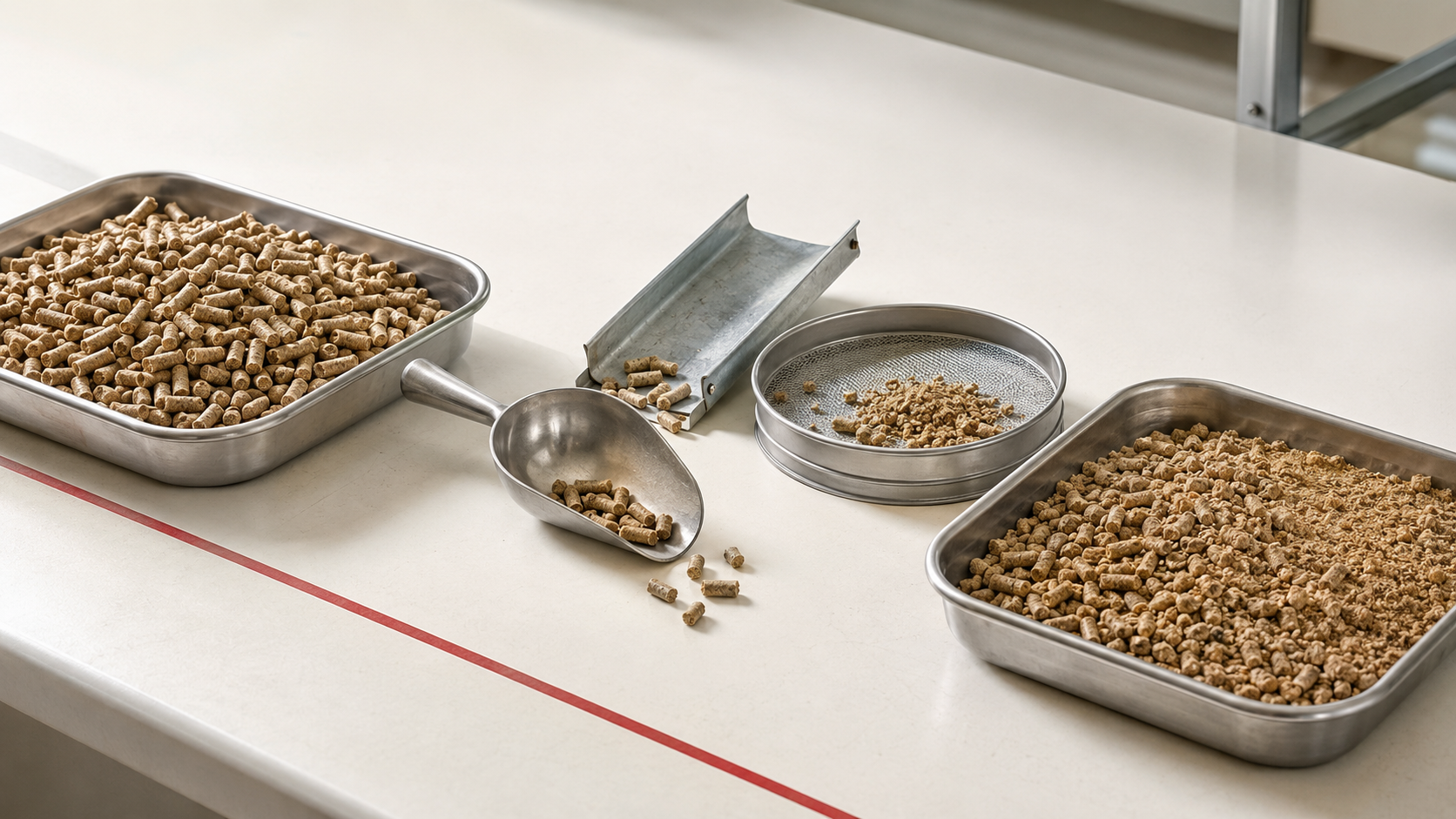 Logistics & DeliveryBroken Pellets Nearly Tripled. The Durability Test Barely Moved.A pellet durability index can remain high while the share of broken pellets in the load rises sharply. Mills need both mill-side PDI and downstream fines or breakage measurements to know what reaches the feeder.