The Hidden Caloric Cost of Pellet Fines
Broken pellets can force broilers to burn formulation energy at the feeder—not just waste feed in the litter.

Courtesy of BarnX
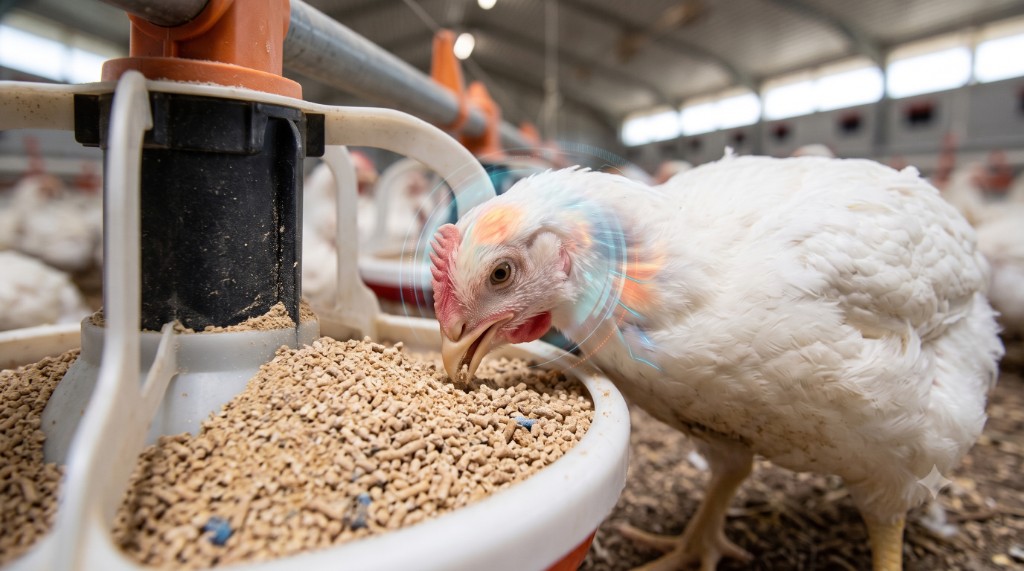
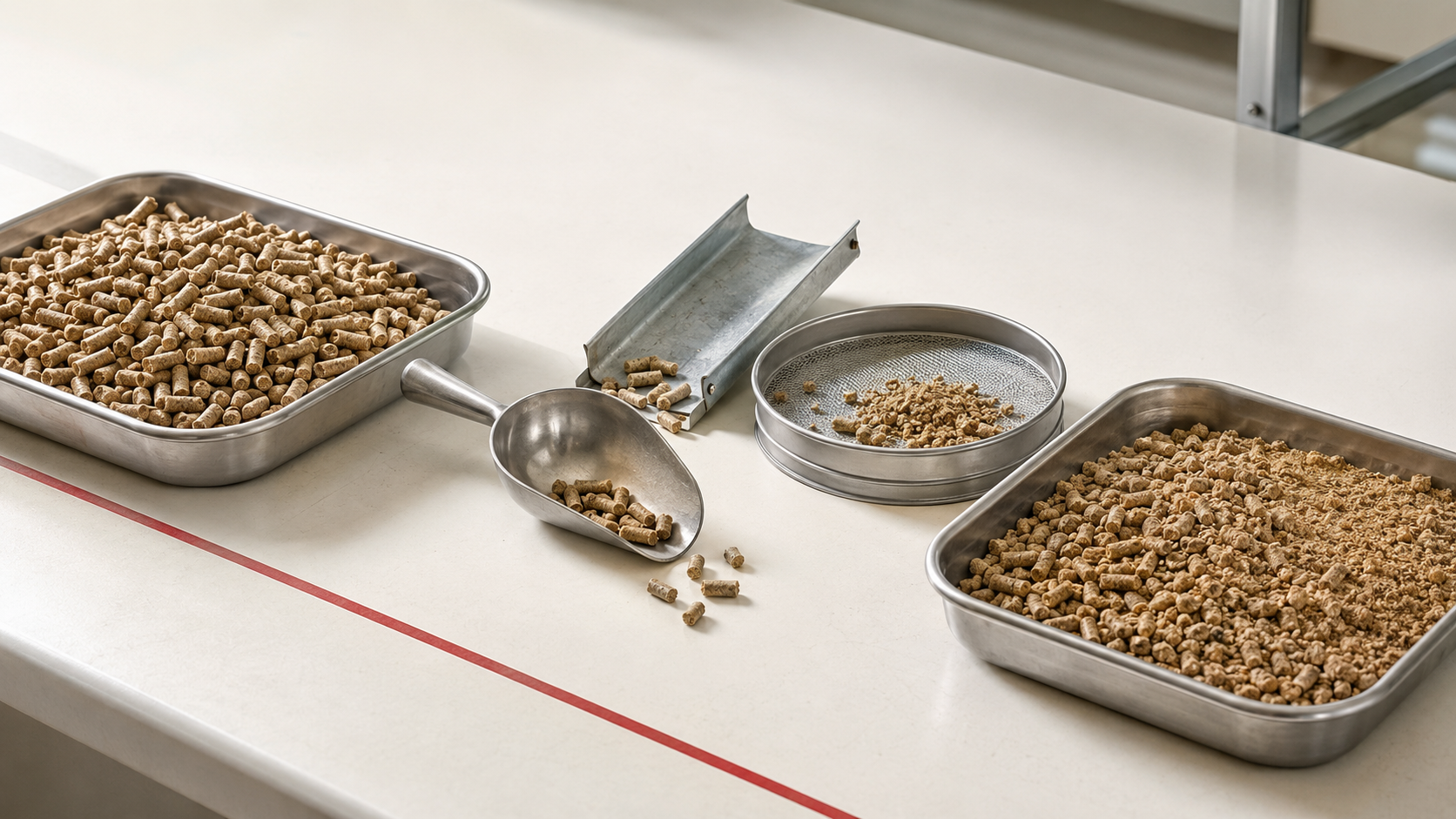
Feed mills track pellet durability; poultry farms watch fines in the pan. The usual explanation—sorting, litter waste, nutrient segregation—is real, but it is incomplete. High fines can also force birds into continuous pecking, burning calories that were formulated for growth.
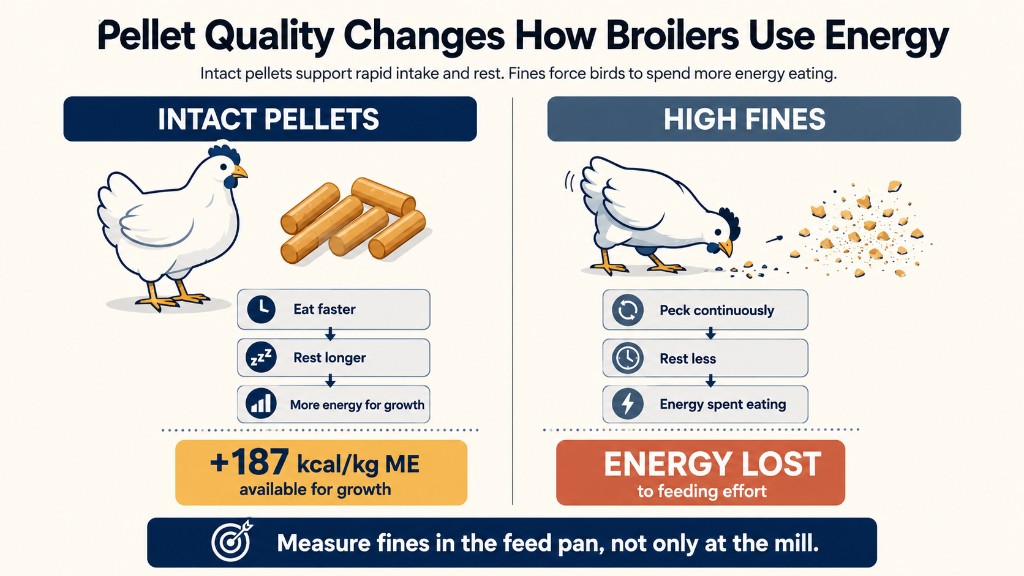
Effective Caloric Value (ECV) research shows that feed form changes how broilers divide time between eating and resting. Birds on 100% intact pellets meet intake quickly and rest more. Birds on mash or high-fines pelleted feed peck more often for the same volume. That extra eating time is physical work—and the energy spent on prehension is subtracted from net energy available for gain.
The bird can use feed energy simply to consume the feed.
Published broiler research reports that maintaining 100% pellet quality can contribute about 187 kcal of apparent metabolizable energy (AMEn) per kilogram of diet compared with a 100% mash diet. As pellet quality falls and fines rise in the pan, ECV declines curvilinearly. At farm level, every 10-percentage-point increase in whole pellets at the feeder has been associated with about a 0.4-point improvement in feed conversion ratio and higher breast weight in cited work—species- and study-specific, but directionally consistent.
| Metric | 100% intact pellets | High fines (>40%) | Operational note |
|---|---|---|---|
| Feeding behavior | Low frequency, high intake per peck | High frequency, continuous pecking | Fines require more exertion to apprehend |
| Resting time | High | Low | Less rest reduces net energy for gain |
| Effective caloric value | +187 kcal/kg of diet | Approaches 0 kcal/kg surplus | Physical form changes biological energy yield |
| Feed conversion | Optimal in cited work | Depressed | ~0.4 FCR point per 10% drop in intact pellets |

Courtesy of BarnX
The formulation dead zone
Nutritionists often add dietary fat to raise caloric density. When more than about 1.0–1.5% is added in the mixer before pelleting (mixer-added fat, or MAF), the fat lubricates the die, reduces friction and shear needed for starch gelatinization, and can coat particles so steam penetrates poorly during conditioning. The diet may look stronger on paper but leave the mill fragile.
By loadout, augers and delivery lines, those pellets can become fines. The bird may then burn the added fat energy just to eat the crumbled feed—neutralizing the nutritional upgrade. Post-pellet liquid application (PPLA) for part of the fat helps preserve structure while keeping density.
| Parameter | Risky practice | Better practice | Why it matters |
|---|---|---|---|
| Fat application | >1.5% mixer-added fat | <1.5% MAF; remainder via PPLA | High MAF lubricates the die and hurts PDI |
| Steam conditioning | Low retention or inadequate temperature | 75°C for 60 seconds (starter example) | Supports gelatinization without extreme vitamin loss |
| Die specification | Thin die, low L:D ratio | L:D matched to formulation | More compression time can yield harder pellets |
At the mill
- Limit mixer-added fat to about 1.0–1.5% and route remaining formulated fat through post-pellet liquid application.
- Standardize conditioning to a defined retention time and temperature window validated for the product family—75°C for 60 seconds is one cited starter-diet example.
- Protect die friction and compression time as part of pellet quality, not only caloric density on the formula sheet.
At the farm
- Measure fines inside feed pans at the end of the barn line—not only at the delivery auger or on the feed ticket.
- Treat >40% fines as a signal that birds may be burning formulation energy to eat, not only wasting feed.
- Use pan-level data in discussions with the mill on delivery handling, die settings or fat routing.
Continue on the desk
Other briefs worth a read while you are here.
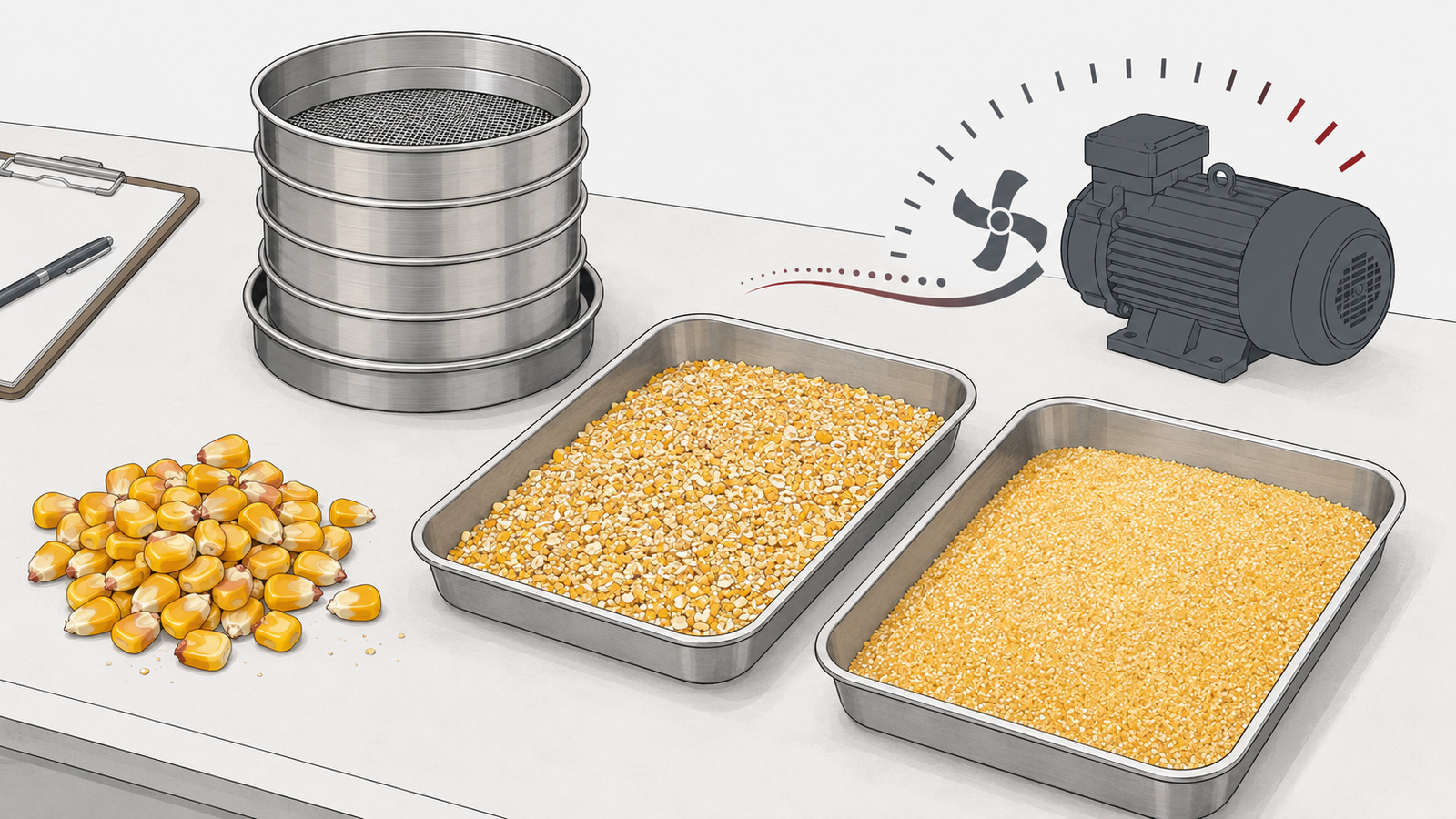 Feed & LivestockFiner Grinding Improves Feed Efficiency but Costs Mill CapacityIn a controlled finishing-pig study, reducing corn particle size from 1,000 to 400 µm improved gain per unit of feed by 8%, but it also increased grinding energy, reduced production rate and increased stomach lesions. The right target is a documented mill-and-animal compromise, not simply the finest grind available.
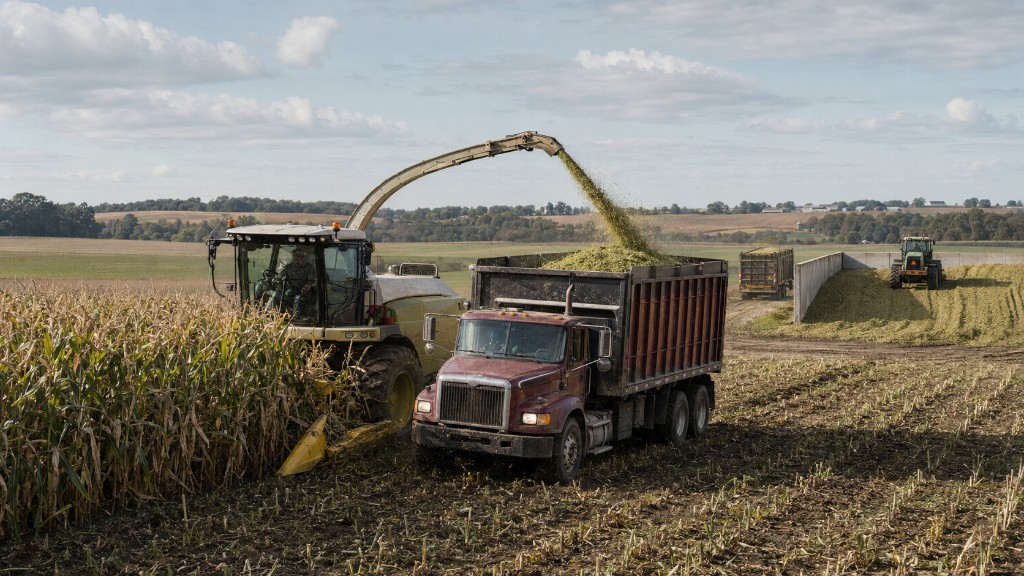 Feed & LivestockCorn Silage Harvest Is a Chain of Decisions, Not a DateCorn silage quality cannot be repaired after the bunker is closed. As harvest approaches, farms should manage moisture, kernel processing, packing capacity, sealing and forage transition as one connected process.
 Logistics & DeliveryBroken Pellets Nearly Tripled. The Durability Test Barely Moved.A pellet durability index can remain high while the share of broken pellets in the load rises sharply. Mills need both mill-side PDI and downstream fines or breakage measurements to know what reaches the feeder.