A Two-Point Moisture Drop Costs More Than Two Percent of the Weight
Water shrink follows dry-matter balance, so inventory can fall even when no grain is spilled.

Courtesy of BarnX
Two moisture points are not two percent of the load
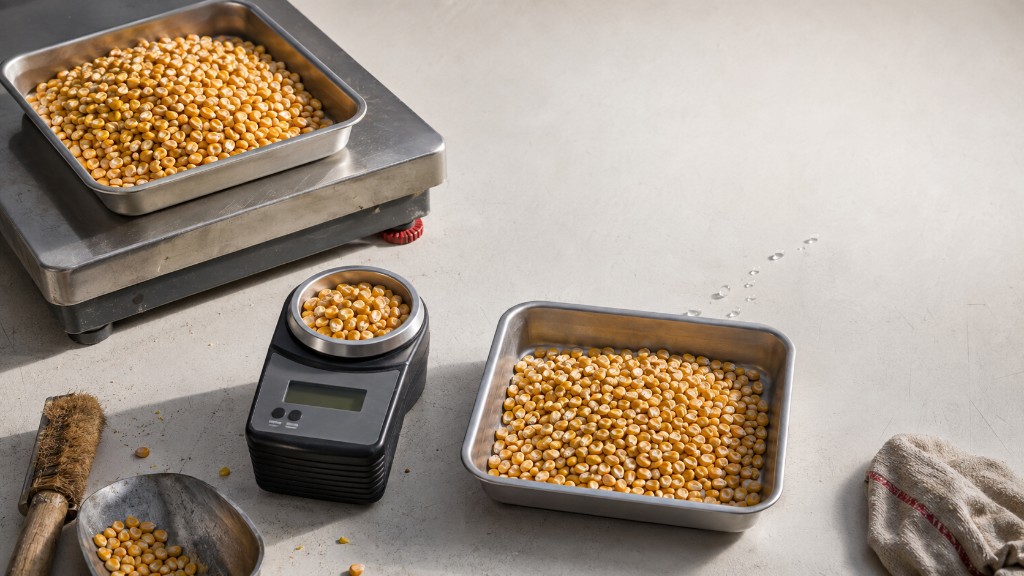
A feed mill receives corn at 15% moisture and later measures it at 13%. It is tempting to record a 2% weight loss and move on. That shortcut is wrong. Moisture content is a percentage of the grain’s total weight, and that total changes as water leaves. The two moisture readings therefore use different denominators.
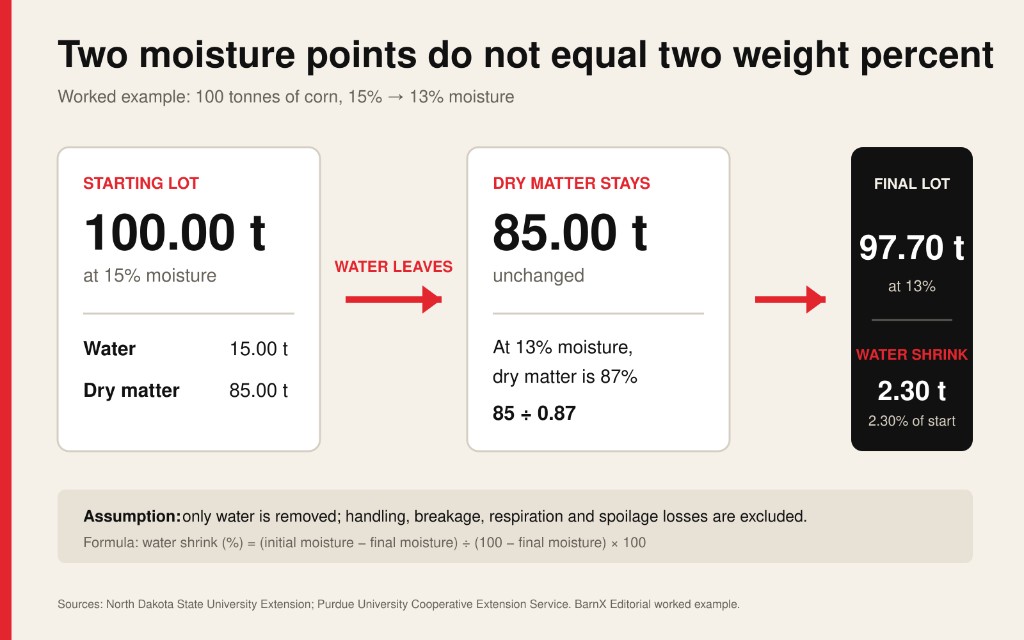
The correct calculation preserves dry matter. North Dakota State University gives the water-shrink formula as: Water shrink (%) = (initial moisture − final moisture) ÷ (100 − final moisture) × 100.
For a final moisture of 13%, each percentage point removed represents about 1.149% of the original weight. A two-point reduction therefore produces about 2.30% water shrink before any physical handling loss is added.
The denominator changes the answer
Start with 100 tonnes of corn at 15% moisture. The load contains 15 tonnes of water and 85 tonnes of dry matter. If only water is removed, those 85 tonnes of dry matter remain.
At 13% moisture, dry matter represents 87% of the final weight. The final weight is therefore 85 tonnes ÷ 0.87 = 97.70 tonnes. The theoretical water loss is 100.00 − 97.70 = 2.30 tonnes, or 2.30% of the starting weight.
Courtesy of BarnX
The extra 0.30 tonne is not mysterious. After drying, 13% is calculated against a smaller final total, not the original 100 tonnes.
The relationship is general, but the example is not a universal target. Safe or contractual moisture levels depend on the grain, expected storage duration, temperature, handling system and purchasing specification. The calculation estimates water shrink between two measured moisture contents; it does not decide what the final moisture should be.
Do not call every missing tonne “moisture”
Water shrink is only one part of inventory shrink. Purdue University Extension separates it from handling loss caused by factors such as broken kernels, foreign-material removal, volatile losses and respiration. Spillage, dust collection, scale error, sampling bias, spoilage and unrecorded transfers can create additional differences. A pencil calculation should not be used to hide those losses.
The reverse mistake is equally costly: treating mathematically expected water loss as unexplained disappearance. If a large grain position dries during aeration or storage, book inventory can exceed physical inventory even when material control is sound. Moisture-adjusted reconciliation gives operations and finance a defensible starting point.
Measurement quality matters because a small moisture error can move many tonnes on a large position. NDSU warns that corn tested immediately after high-temperature drying may read about two percentage points below its true moisture under some conditions. Its guidance recommends holding the sample in a sealed container for about 12 hours and retesting; grain temperature must also be accounted for. That warning is specific to hot, recently dried corn, but the broader lesson applies everywhere: compare representative samples measured with a consistent, verified method.
Build moisture into inventory reconciliation
For each major grain position, record inbound weight and representative inbound moisture, then repeat the process at transfer, processing or period-end when practical. Calculate theoretical water shrink separately from physical handling allowances and unexplained variance.
A simple reconciliation should show:
- Starting wet weight and moisture.
- Starting dry-matter tonnes.
- Ending moisture and moisture-adjusted expected weight.
- Documented removals, screenings and transfers.
- Scale or measurement corrections.
- Remaining unexplained variance requiring investigation.
Do not mix commercial “pencil shrink” factors with pure water shrink without checking what they include. Purdue notes that buyer shrink factors may include an allowance for handling loss as well as water removal. A factor used for settlement may therefore be inappropriate for diagnosing mill inventory.
More in Grain & Ingredients
Other briefs in this lane — each stands on its own.
Continue on the desk
Briefs from other lanes worth a read while you are here.
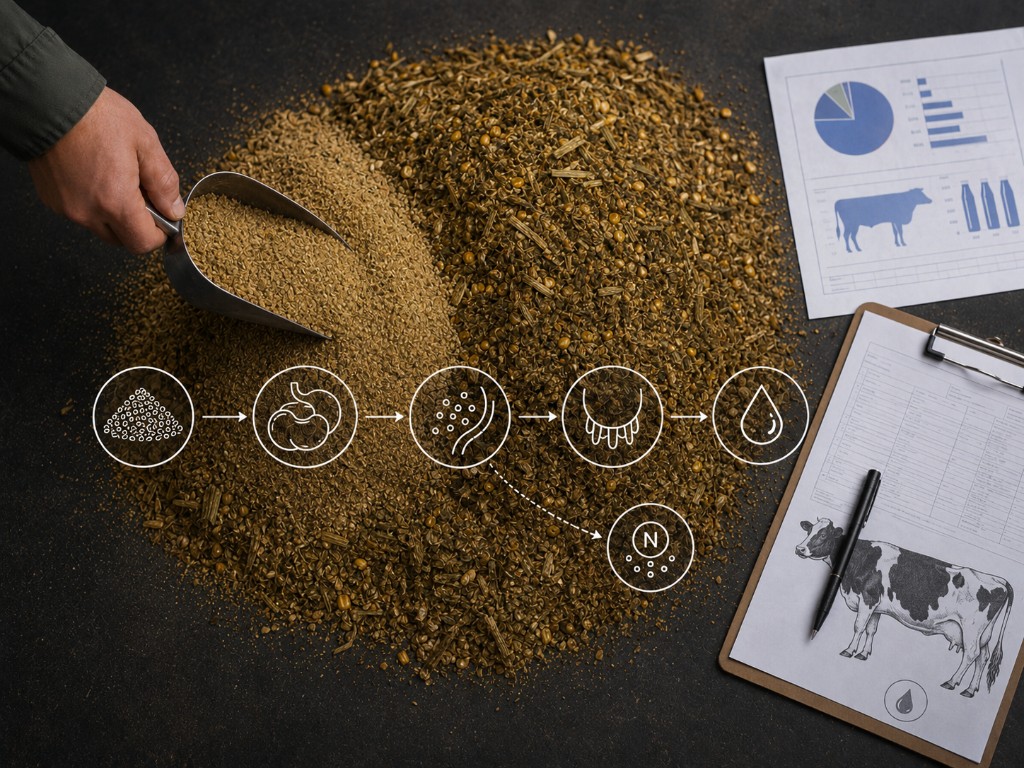 Feed & LivestockMore Crude Protein Is Not the Same as More Milk ProteinCrude protein describes how much nitrogen is in a ration, not how much balanced, digestible amino-acid supply reaches the mammary gland. Before increasing soybean meal, canola meal or another protein source, identify whether the real limitation is intake, rumen microbial protein, metabolizable protein, amino acids or energy.
 Feed & LivestockThe Hidden Caloric Cost of Pellet FinesFines are often treated as a handling nuisance. Effective Caloric Value research shows they can also drain up to 187 kcal/kg of apparent metabolizable energy through the physical effort of eating—changing FCR even when the formula on paper looks strong.
 Logistics & DeliveryBroken Pellets Nearly Tripled. The Durability Test Barely Moved.A pellet durability index can remain high while the share of broken pellets in the load rises sharply. Mills need both mill-side PDI and downstream fines or breakage measurements to know what reaches the feeder.