More Corn, Firmer Prices: What Canadian Feed Mills Should Watch in 2026–27
Canada could have more corn available next crop year, but availability alone will not remove price, freight or scheduling risk.
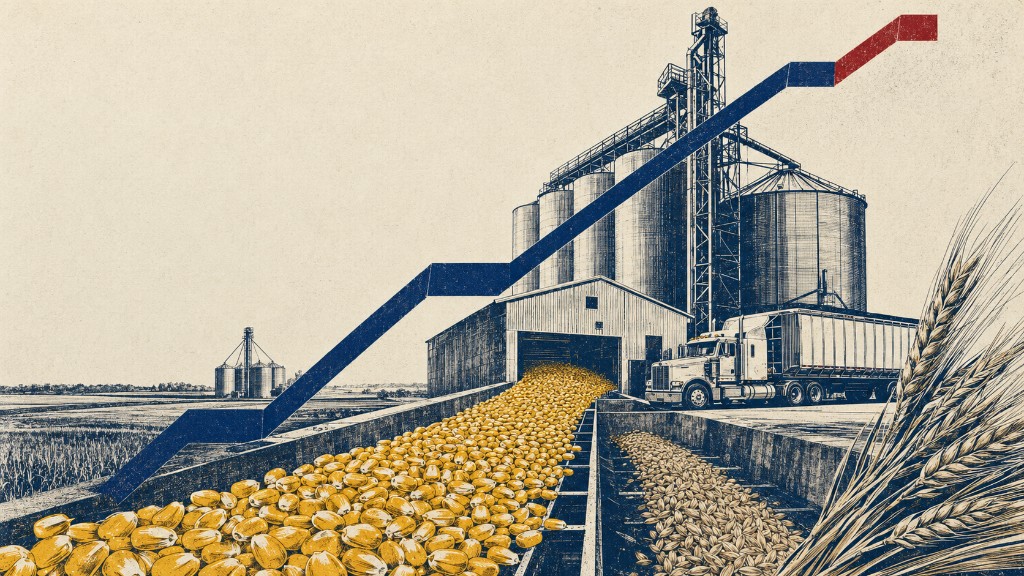

Courtesy of BarnX
Canada’s latest crop outlook gives feed mills two messages that appear to conflict: more corn should be available in 2026–27, but benchmark prices may still move higher.
That is not a contradiction. It is a reminder that a feed mill does not buy a national production figure. It buys grain at a specific location and time, with basis, freight, quality, storage capacity and customer commitments attached.
A larger Canadian corn supply
Agriculture and Agri-Food Canada estimates that farmers seeded 1.604 million hectares of corn in 2026, up 5% from the previous year and the highest area on record. Assuming expected yields, production is forecast to reach 16.4 million tonnes.
With carry-in stocks and imports included, total Canadian corn supply could reach 20.4 million tonnes, the second-highest level on record. Feed, waste and dockage use is forecast at 9.9 million tonnes, up from 9.284 million tonnes in 2025–26.
But AAFC also projects the Chatham corn price at $240 per tonne, $10 higher than the previous year. The report points primarily to stronger U.S. corn prices. USDA’s July outlook forecasts U.S. feed-grain production at 420.1 million tonnes, the second-largest crop on record, but 6% below last year.
More grain in Canada does not automatically mean cheaper grain at the mill gate.
Barley sends a tighter signal
Canadian barley acreage increased 9%, but production is forecast to decline 5% to 9.2 million tonnes as yields return from last year’s record level. Total barley supply is expected to fall 7% to 10.3 million tonnes.
AAFC projects the Lethbridge feed-barley price at $295 per tonne, also $10 higher year over year. Mills may therefore face a shifting relationship between corn, barley and other energy ingredients rather than a simple move toward lower feed-grain costs.
| 2026–27 forecast | Corn | Barley |
|---|---|---|
| Canadian production | 16.4 Mt | 9.2 Mt |
| Total supply | 20.4 Mt | 10.3 Mt |
| Supply direction | Higher | 7% lower |
| Benchmark price | $240/t Chatham | $295/t Lethbridge |
| Price change | +$10/t | +$10/t |
The operational consequence
The obvious response to changing ingredient economics is to reformulate. That may be nutritionally and financially correct, but ingredient cost is only the first decision.
A meaningful change in corn or barley use can alter receiving schedules, bin capacity, inventory turns, grinding requirements, batching sequences and finished-feed characteristics. It can also affect products already promised to customers.
If purchasing, nutrition, production and dispatch are working from different assumptions, a saving in the formula can create cost elsewhere in the operation.
The practical answer is scenario planning:
- A base case using current crop and price expectations.
- A tighter case reflecting weaker yields, stronger exports or a wider local basis.
- A logistics case covering delayed inbound loads, limited storage or freight disruption.
These cases do not need to predict the market perfectly. They need to identify which formulas, ingredients, bins, production runs and customer deliveries would be affected first.
What to watch next
The forecast is still weather-dependent. AAFC specifically notes uncertainty from excess moisture in parts of Western Canada, and its next principal field-crop outlook is scheduled for August 20.
Until then, feed mills should follow crop conditions, regional basis, the Canadian dollar, export demand, freight availability and harvest quality.
The useful question is not simply whether Canada will grow more corn. It is whether the mill can translate changing grain economics into coordinated purchasing, production and delivery decisions.
More in Grain & Ingredients
Other briefs in this lane — each stands on its own.

Continue on the desk
Briefs from other lanes worth a read while you are here.
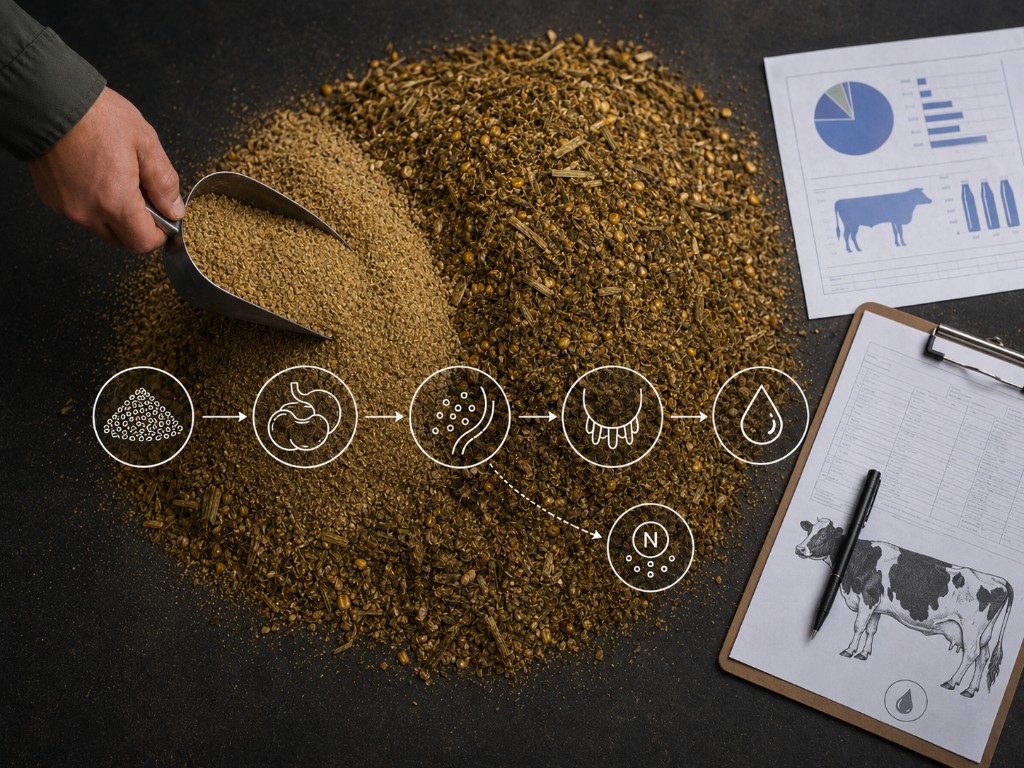 Feed & LivestockMore Crude Protein Is Not the Same as More Milk ProteinCrude protein describes how much nitrogen is in a ration, not how much balanced, digestible amino-acid supply reaches the mammary gland. Before increasing soybean meal, canola meal or another protein source, identify whether the real limitation is intake, rumen microbial protein, metabolizable protein, amino acids or energy.
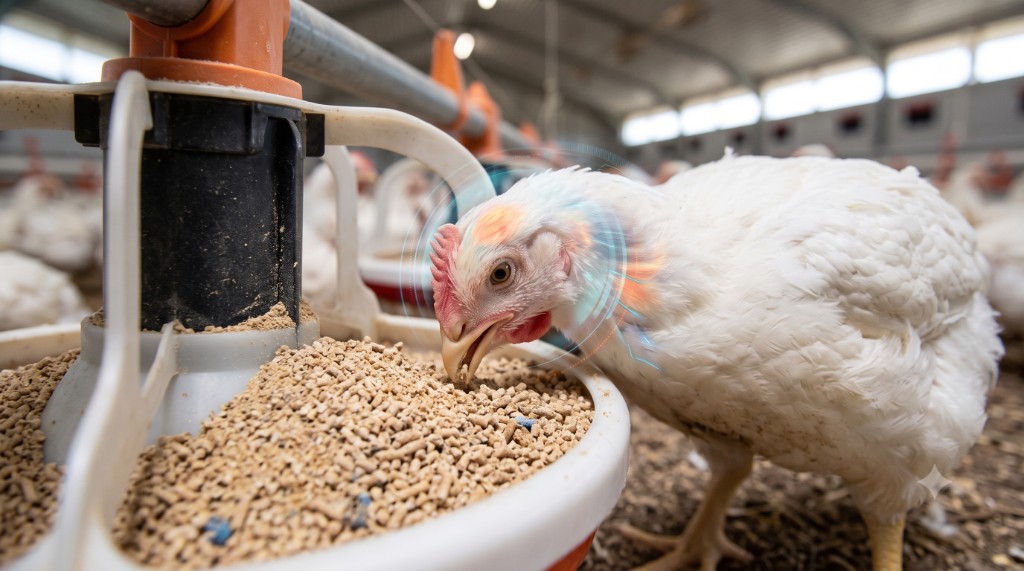 Feed & LivestockThe Hidden Caloric Cost of Pellet FinesFines are often treated as a handling nuisance. Effective Caloric Value research shows they can also drain up to 187 kcal/kg of apparent metabolizable energy through the physical effort of eating—changing FCR even when the formula on paper looks strong.
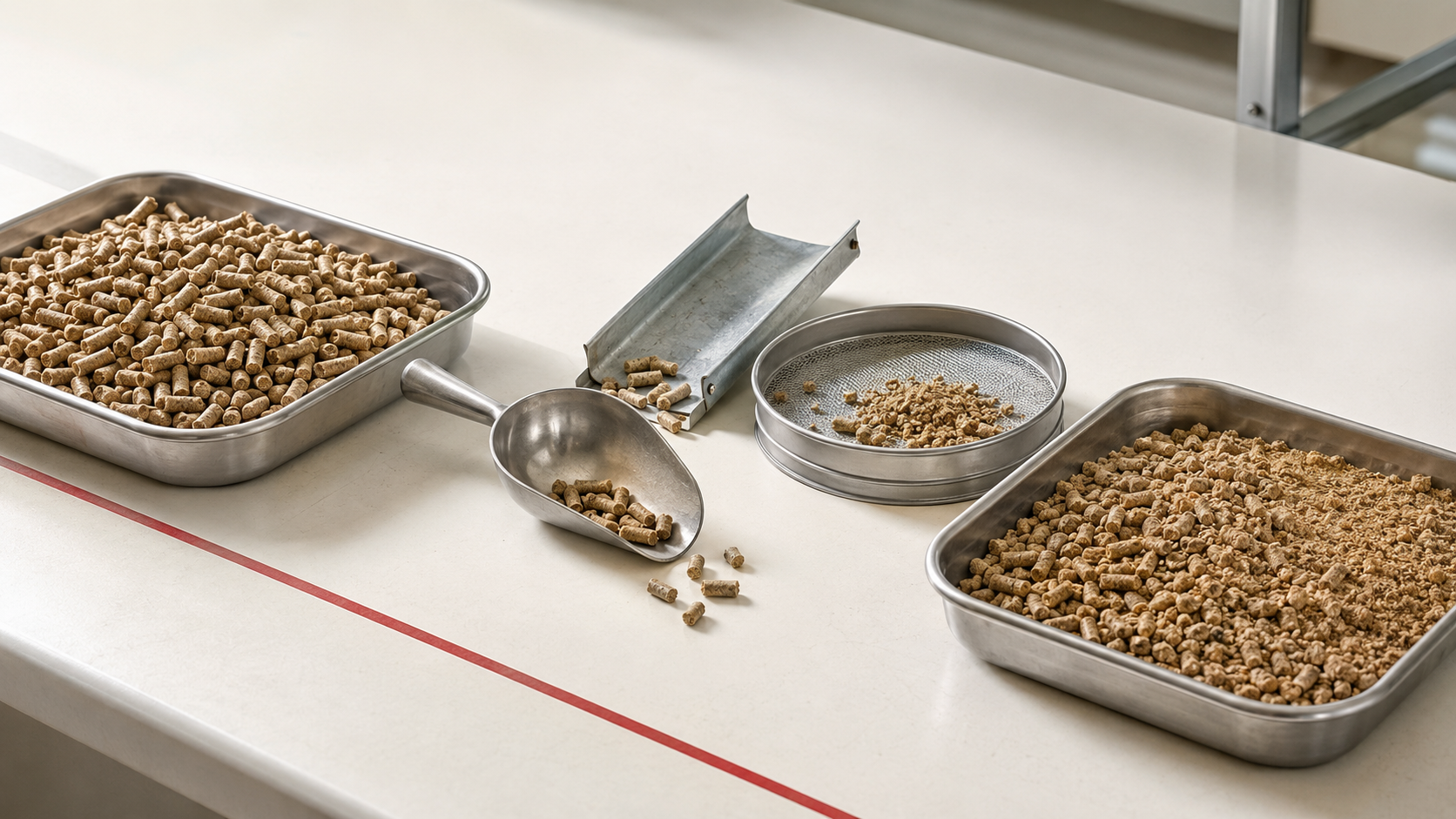 Logistics & DeliveryBroken Pellets Nearly Tripled. The Durability Test Barely Moved.A pellet durability index can remain high while the share of broken pellets in the load rises sharply. Mills need both mill-side PDI and downstream fines or breakage measurements to know what reaches the feeder.