The Smaller the Inclusion, the Bigger a Fixed Scale Error Becomes
A scale that performs well on major ingredients may be the wrong tool for a 10-kilogram addition.

Courtesy of BarnX
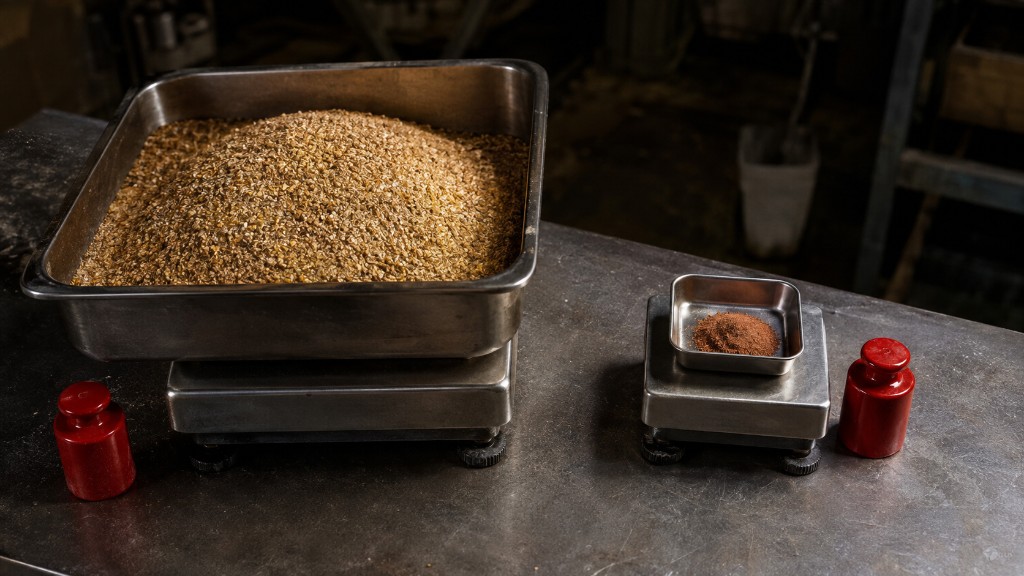
A batching scale can be calibrated, repeatable and suitable for major ingredients, yet still be a poor choice for a small inclusion. The reason is simple: the scale produces an error in units of mass, while the formula experiences that error as a percentage of the ingredient target.
That distinction is easy to miss when one large hopper handles ingredients with very different batch weights. A one-kilogram deviation is almost invisible in a 1,000 kg grain addition. The same deviation is material in a 100 kg protein addition and severe in a 10 kg additive addition.
This does not mean every large scale has a 1 kg error, or that every small addition is inaccurate. It means scale suitability must be evaluated at the actual operating weight, not inferred from capacity or a single full-range test.
The denominator changes the risk
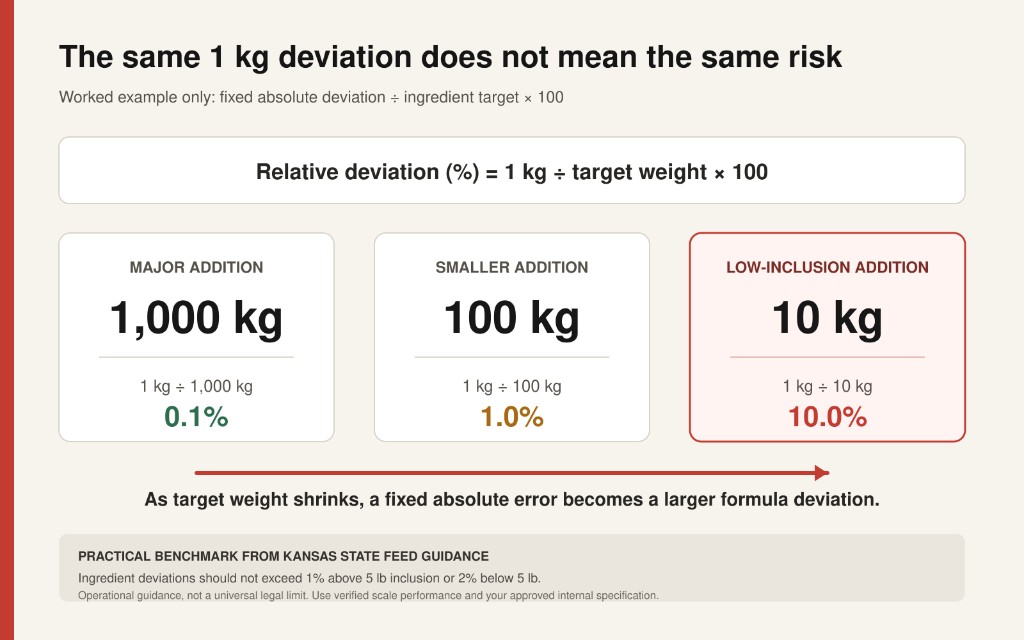
The useful calculation is: Relative deviation (%) = absolute deviation ÷ target ingredient weight × 100.
Consider a deliberately simple worked example in which the observed absolute deviation is 1 kg: at a 1,000 kg target, relative deviation is 0.1%; at 100 kg, it is 1.0%; at 10 kg, it is 10.0%.

Courtesy of BarnX
Nothing changed in the scale error. Only the ingredient target changed. This is why quoting accuracy only as a percentage of scale capacity can hide the operational question that matters: how large could the error be relative to the smallest routine weighment?
NIST Handbook 44 formalizes metrological concepts such as scale divisions, tolerances and minimum measured quantities for regulated weighing applications. A feed-mill batching program must go further by connecting verified device performance to formula-specific targets. Legal-for-trade compliance, calibration and production suitability are related controls, but they are not interchangeable.
Batching accuracy comes before mixing uniformity
A mixer cannot redistribute an ingredient that never entered the batch at the intended amount. Kansas State University’s feed-manufacturing guidance calls accurate ingredient weighing the most critical step in precision feeding. As a practical quality benchmark, the guide says deviations from specification should not exceed 1% for ingredients included above 5 lb and 2% for ingredients below 5 lb. Those are operational guidelines, not universal legal limits; a mill’s approved specification may need to be tighter depending on the ingredient, species, medication status and customer requirements.
Field evidence shows why the issue deserves attention. A peer-reviewed study of mineral-supplement handling on five large Western U.S. dairies found an average weighing deviation of 1.54%, with substantial variability among loads. The work was conducted on farms rather than commercial feed mills, so its numeric result should not be transferred directly to mill equipment. Its lesson is still relevant: low-inclusion, nutrient-dense materials magnify the consequence of inconsistent weighing, and preparing a premix can raise the inclusion weight before final mixing.
Build a minimum operating weight, not a vague warning
For each batching scale, use recent verification data to estimate the largest credible absolute deviation under normal conditions. Then calculate the relative effect at the smallest target assigned to that scale.
If a mill allows at most 1% deviation and verification shows that absolute deviation can reach 0.5 kg, the calculated minimum target would be: Minimum target = 0.5 kg ÷ 0.01 = 50 kg. This is an engineering screen, not permission to ignore feeder free-fall, material dribble, vibration, zero drift, buildup, load-cell binding or operator corrections. The minimum should be confirmed with repeated tests using representative materials and operating conditions.
A practical scale audit should therefore record: the formula target for every ingredient; the scale and feeder used; observed accuracy and repeatability across the working range; the mill’s permitted relative deviation; the smallest approved target for that equipment; and the corrective route for anything below it, such as a smaller scale, a validated premix or manual weigh-up with independent verification.
More in Mill Operations
Other briefs in this lane — each stands on its own.
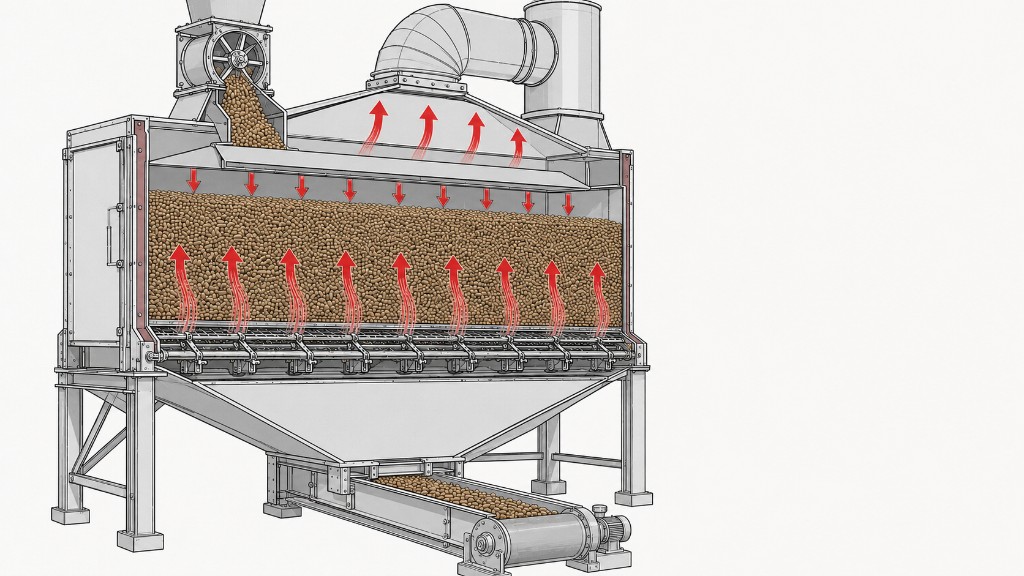 Pellet Cooling Has Two Targets: Temperature and MoistureCooling protects pellet quality and storage stability, but it also removes saleable water. A simple mass balance shows why mills should control outlet moisture and temperature together.
 One Rush Order Can Break the SequenceFeed sequencing is more than an efficient way to arrange the production board. When an urgent order changes the run, the mill must reassess the product, species and entire equipment path before the next batch enters the system.
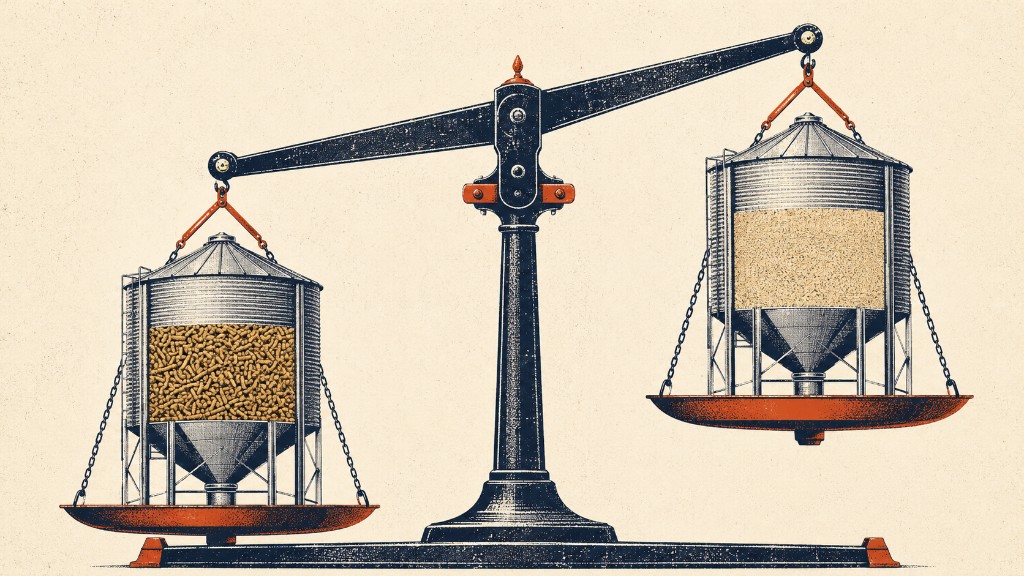 Why a “40-Tonne” Feed Bin Does Not Always Hold 40 TonnesA fixed bin volume can hold dramatically different tonnes when feed form and bulk density change. Mills that treat capacity as one permanent number risk split deliveries, overfills, and false inventory.
Continue on the desk
Briefs from other lanes worth a read while you are here.
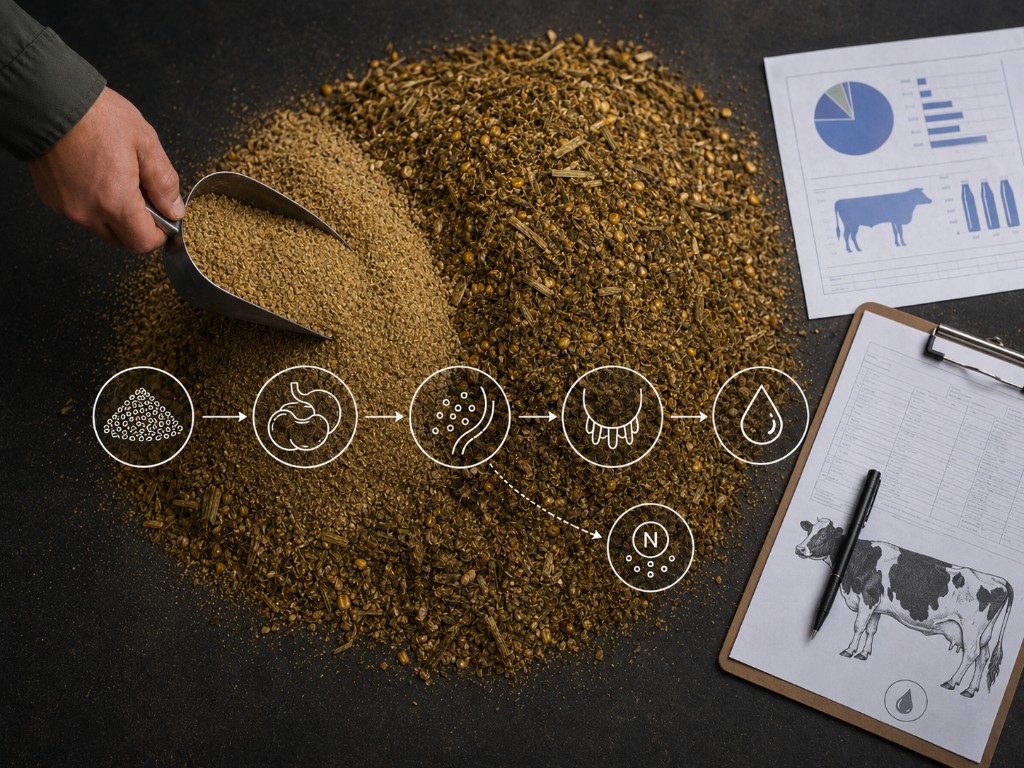 Feed & LivestockMore Crude Protein Is Not the Same as More Milk ProteinCrude protein describes how much nitrogen is in a ration, not how much balanced, digestible amino-acid supply reaches the mammary gland. Before increasing soybean meal, canola meal or another protein source, identify whether the real limitation is intake, rumen microbial protein, metabolizable protein, amino acids or energy.
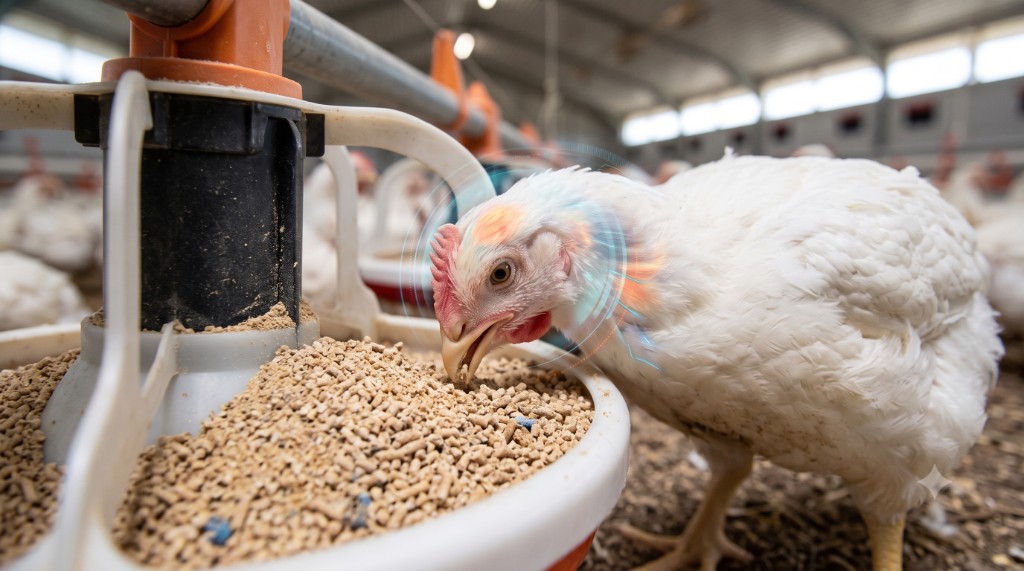 Feed & LivestockThe Hidden Caloric Cost of Pellet FinesFines are often treated as a handling nuisance. Effective Caloric Value research shows they can also drain up to 187 kcal/kg of apparent metabolizable energy through the physical effort of eating—changing FCR even when the formula on paper looks strong.
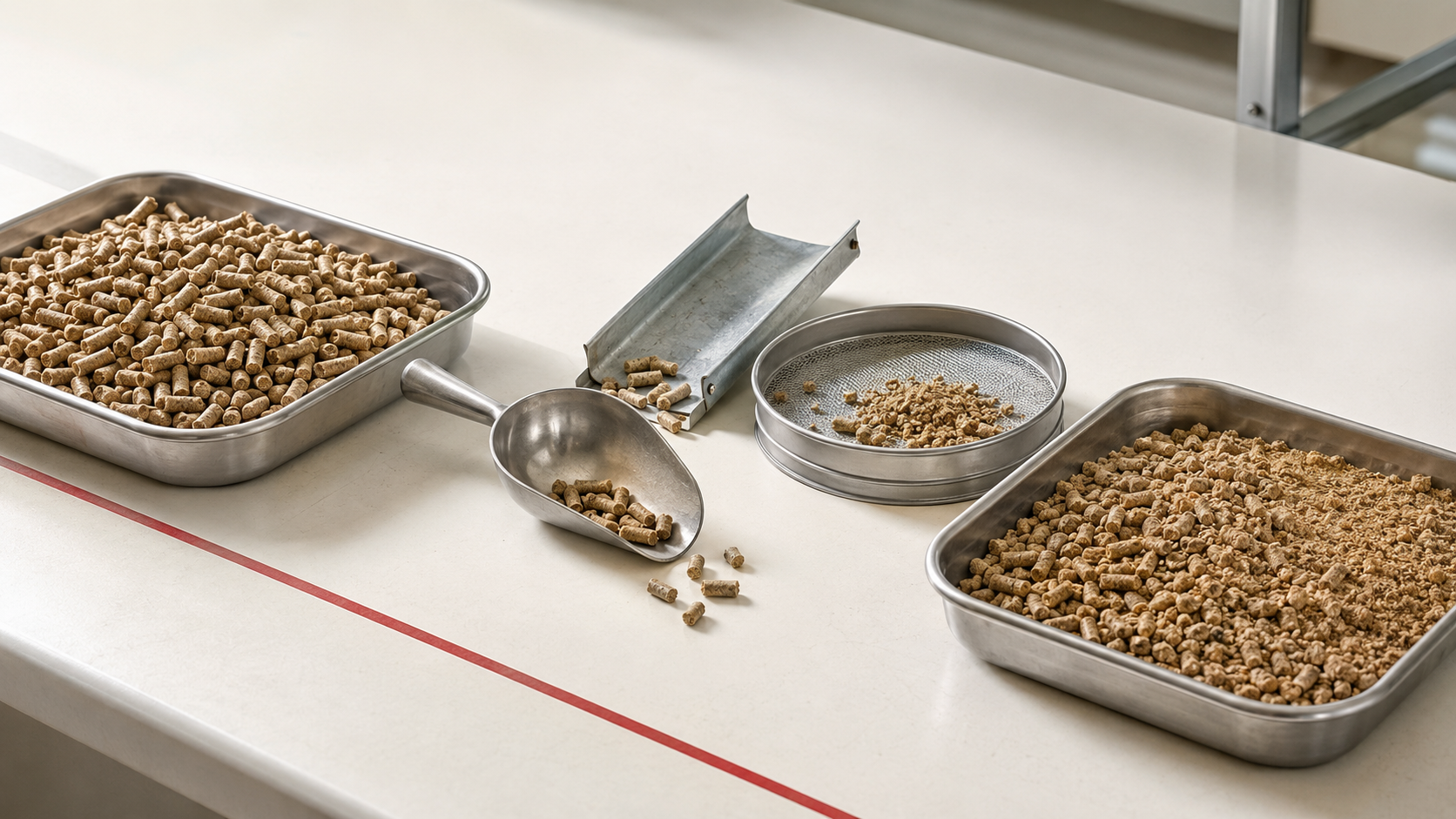 Logistics & DeliveryBroken Pellets Nearly Tripled. The Durability Test Barely Moved.A pellet durability index can remain high while the share of broken pellets in the load rises sharply. Mills need both mill-side PDI and downstream fines or breakage measurements to know what reaches the feeder.